
Funeral of Lt Cdr John Stephen Coggins MBE RN
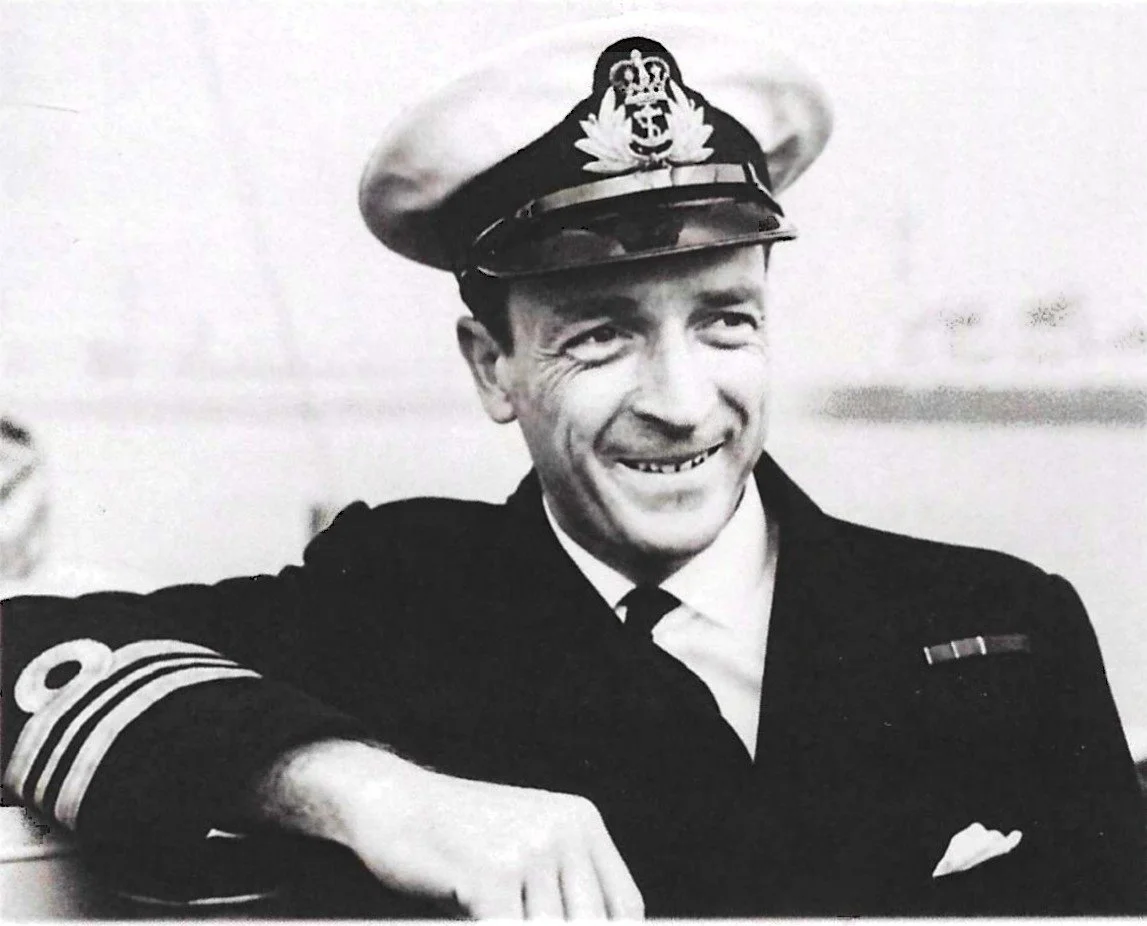
16 Aug 2026 - MCDOA members David Sandiford with his wife Pauline, Jon Riches with his wife Anne, Julian Malec OBE and his wife Margaretta, Martyn Holloway, Jim Sykes and Yours Truly (Rob Hoole) plus former WO(D) Colin ‘Scouse’ Kidman QGM attended the funeral of John Coggins, who crossed the bar on 17 July, at Holy Rood church in Stubbington yesterday, poignantly the same venue for the funeral of founding MCDOA Secretary Frank Ward in January 2010 (See my entry for 15 Jan 10 here). Popular naval entertainer Shep Wooley was also in attendance and piped the Still and Carry On early in the ceremony.
Click on the image below to access a copy of the Order of Service.
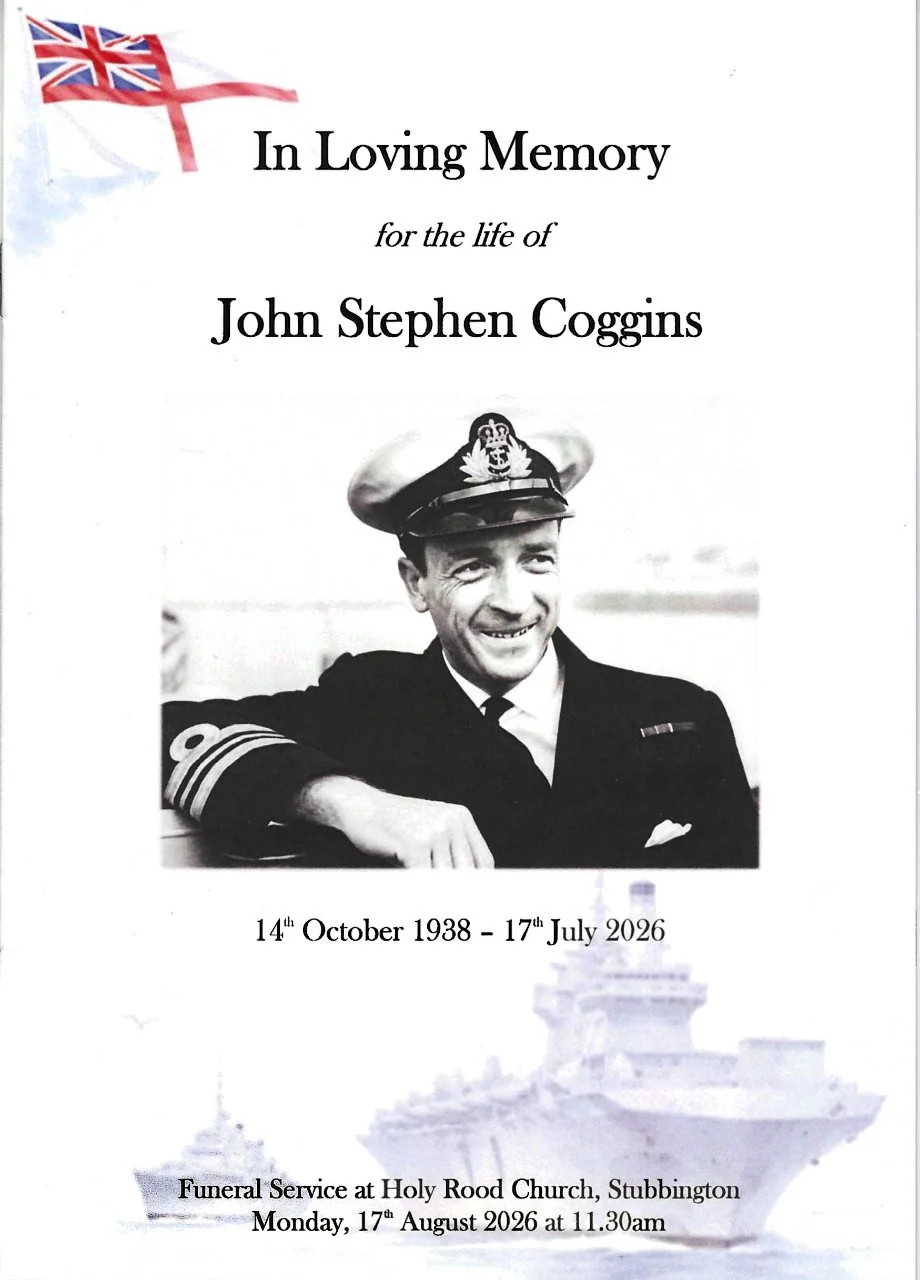
John’s sons, David and Paul, have kindly provided me with the text of their eulogies:
David
“Our dad, John Stephen Coggins. was born on 14th October 1938 in Westcliff-on-Sea, near Southend.
His early years were spent near Derby before the family moved to Folkestone, where he later attended Christ's Hospital boarding school in Horsham.
Dad's real love at school was swimming. He became the Kent Under-15 Backstroke Champion, a trophy he was very proud of and treasured for many years.
He also developed his lifelong love of woodwork. He built gates for the family home and even the roof for a garage extension.
I remember one occasion when someone removed his beloved gates from the front of the house. Dad simply got a wheelbarrow, found the gates further down Old Street, loaded them up and wheeled them home. Anyone who knew Dad will probably smile at that image — it summed him up perfectly.
After leaving school, Dad went to the Merchant Navy College in Warsash, where he flourished and was soon promoted to Cadet Captain.
He then joined P&O and began his life at sea. His first voyage was to China aboard an old cargo ship carrying frozen donkey meat. On a later voyage to New Zealand, he suffered a serious accident and came very close to losing his right foot. He returned to Britain on crutches aboard one of P&O's passenger liners.
After recovering, he gained his First Mate's Certificate and worked on large passenger ships, mainly sailing to Australia.
During this time, he also trained with the Royal Navy on board an aircraft carrier operating off Aden. This eventually led to him transferring permanently into the Royal Navy.
Dad specialised in Diving and Mine Warfare, and was appointed Bomb Disposal Officer for the Far East Fleet, based in Singapore.
It was an exciting time, and when he wasn't working he enjoyed golf, squash and water skiing.
During unrest in Hong Kong, Dad and the Fleet Clearance Diving Team were called upon to assist with bomb disposal.
Dad later wrote about one of his first experiences:
"The first homemade bomb I came across was outside a bank. The day before I had watched an Army bomb disposal man simply kick homemade bombs to check they were harmless. I decided not to do that. Instead I lassoed it, went round the corner and pulled the rope. It exploded like a mini atom bomb! I learnt afterwards that any bomb left outside a bank was genuine."
On another occasion, a bomb was placed high up on an electricity pylon near the Peak in Hong Kong.
Dad decided there was no way he was going to climb it, so a helicopter was called.
Suspended beneath it on a rope, rather like James Bond, he kicked the bomb off the pylon and, in his own words, "did the business — with the electricity switched off!"
What he didn't realise was that much of Hong Kong was watching, including the Governor and Commodore through binoculars.
For this and his other bomb disposal work, Dad was appointed an MBE at just 30 years old.”
Paul
“In 1970 he met our mother. Mary, who was a Nursing Sister in the Queen Alexandra's Royal Naval Nursing Service.
They married after a short engagement in Edinburgh on 19th December 1970.
Dad's career continued to take the family around the world. With two young sons, he was appointed to command a patrol craft [HMS WOLVERTON] in Hong Kong, where my brother and I spent our earliest years.
Eventually, the family settled in Hill Head, in the house that became Dad's pride and joy and remained his home for more than fifty years.
His final sea command was HMS RECLAIM.
One of the most memorable episodes came when a Tornado fighter aircraft crashed into the North Sea and Reclaim was sent to find the black box.
The Ministry of Defence seemed to phone Dad every day asking, "Have you found it yet?"
Eventually, in pitch darkness, one of the divers literally tripped over the black box, half buried in the mud.
Dad finally left the Navy at 55, but retirement wasn't really retirement. He went to work for his former boss, Graham Shaw, spending periods in Asia aboard cable-laying ships. Some cables had to be laid through former minefields, so Dad's Mine Warfare experience was rather reassuring for the insurance companies.
He enjoyed that work enormously, and I remember seeing plenty of photographs of him relaxing on tropical beaches between jobs.
At sixty, he finally retired for good.
Retirement was just as he wanted it: lots of golf, plenty of holidays, usually cruises, whatever the weather — and, most importantly, time with his family.
He particularly loved having his grandchildren, Eleanor, Sophie and Daniel, around the house he was so proud of.
Dad lived an extraordinary life.
He travelled the world, served his country, and achieved things that most of us can scarcely imagine.
But for all those achievements, Dad was at his happiest at home with his family. He was kind, dependable and quietly proud, and he loved nothing more than having his family around him.
Looking around this church today, and seeing so many people here to remember him, it is obvious just how much Dad was loved and respected.
If John were here today, I'm sure he would thank you all for coming to celebrate his life. He would also insist that you join us afterwards at the family home in Old Street, for refreshments.
You are all most welcome.”
Towards the end of the service, Jon Riches explained that he and John had been fellow students on the 1966 Long Minewarfare & Clearance Diving Officers’ course at HMS VERNON after which their paths had often crossed. John had even been his Deputy Superintendent of Diving during the 1980s. Jon then explained the significance of Five Bells for the RN diving community as a lifeline signal (“I have found, started or completed my work”) before David Sandiford rang it out on a bell he had brought with him.
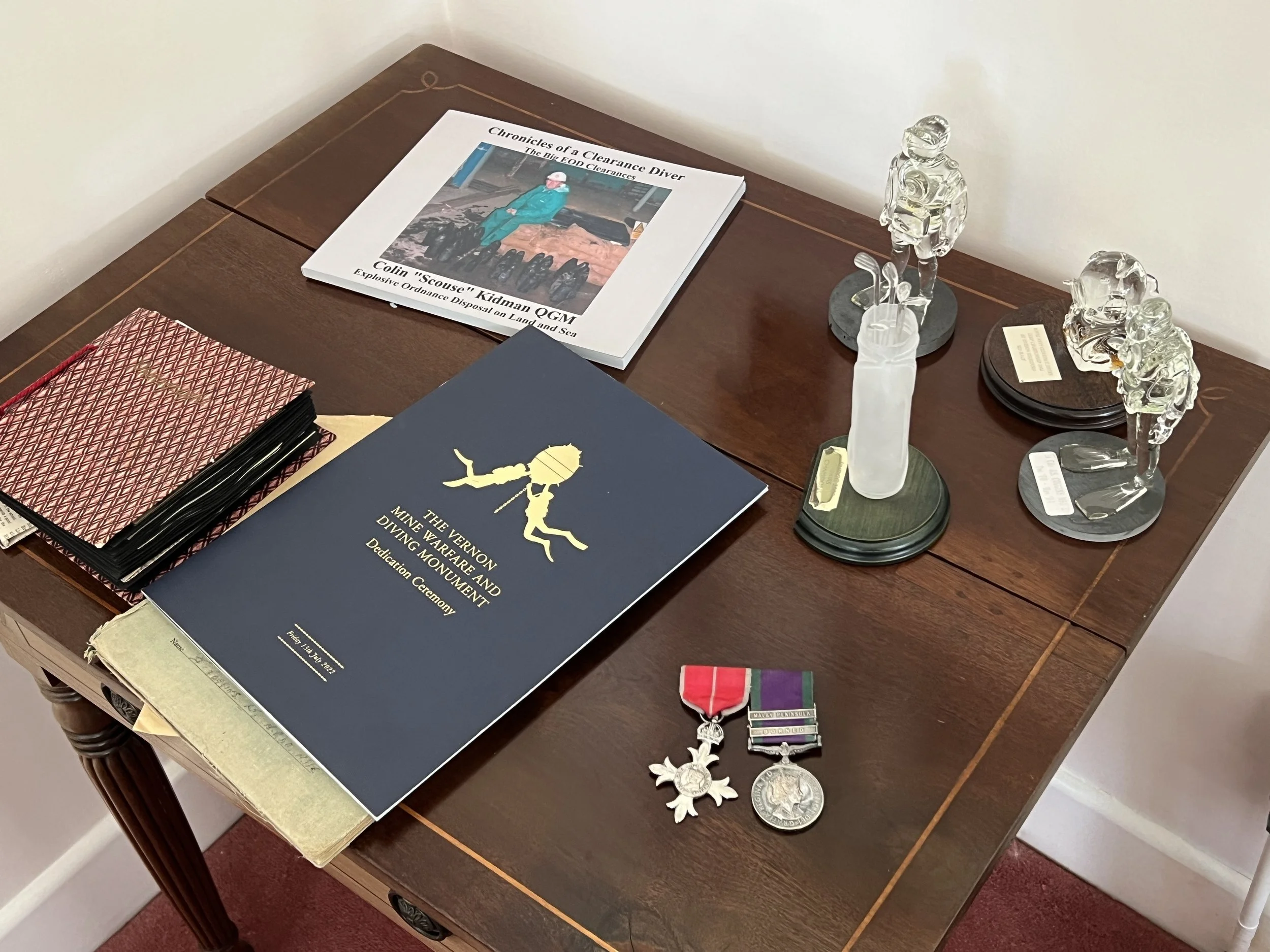
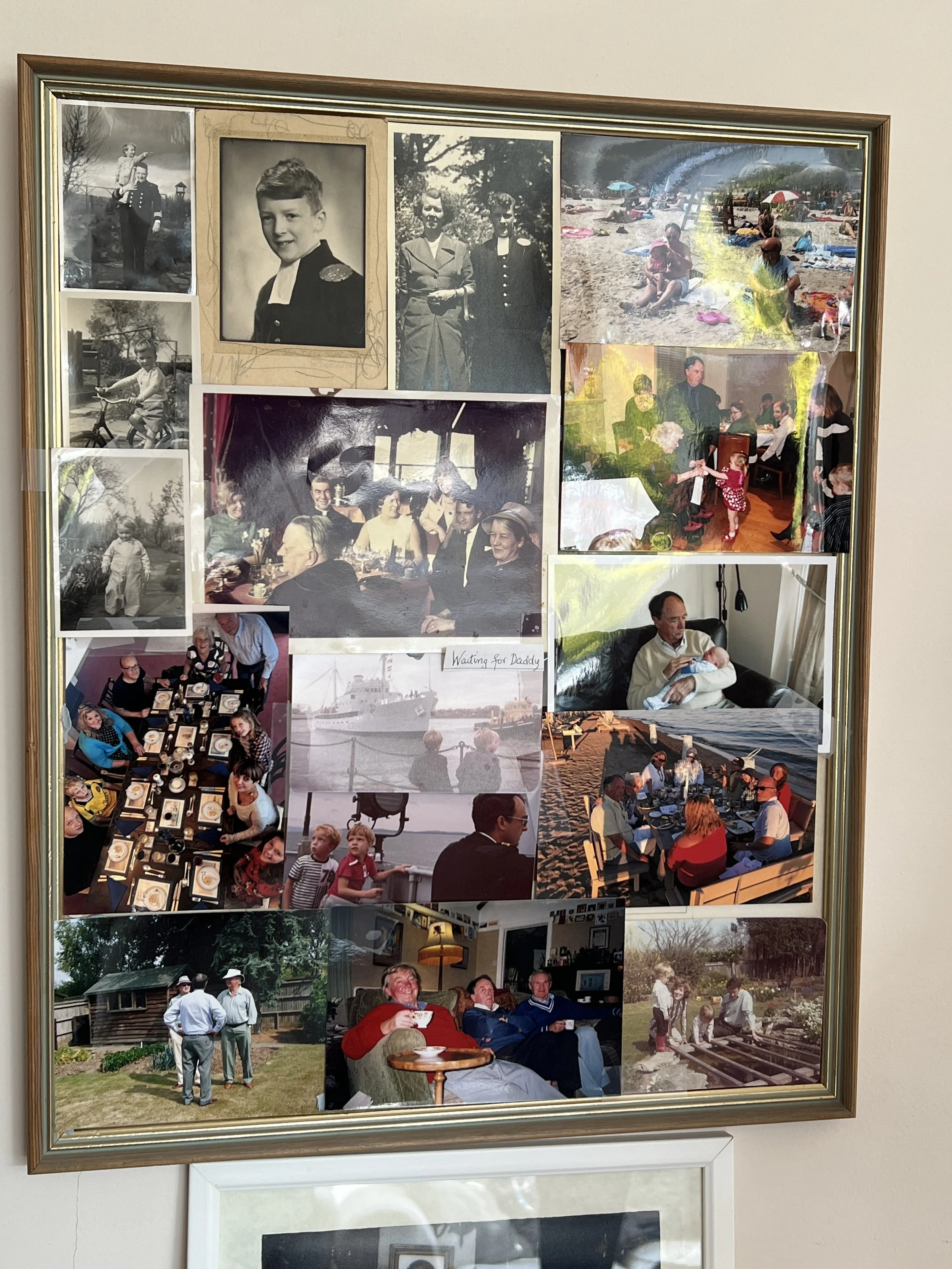
On completion of the service, many of us repaired to John’s house to raise a glass in his memory. His wife Rae and their family had organised a display of many of his photos, some of which are shown here:
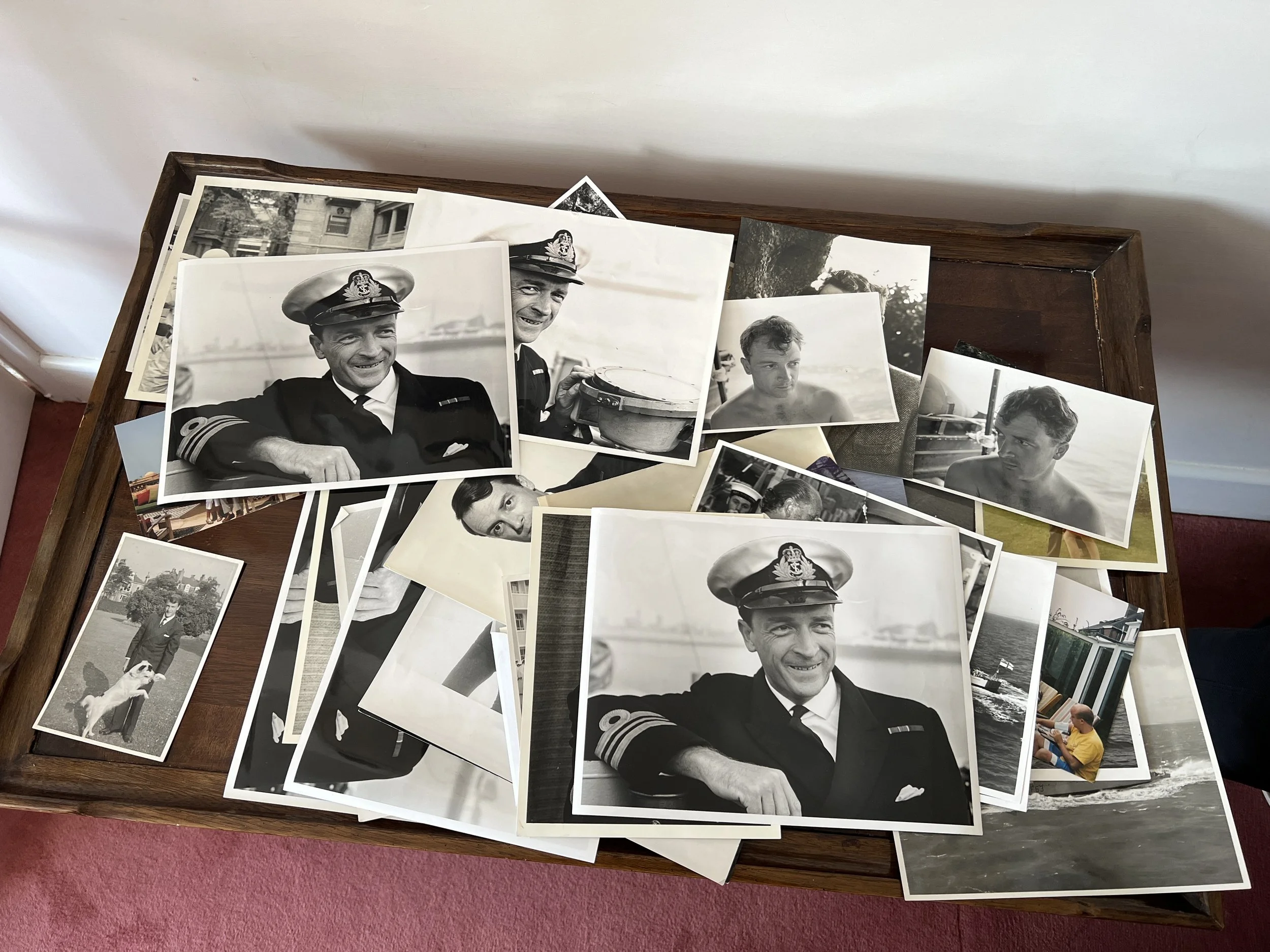
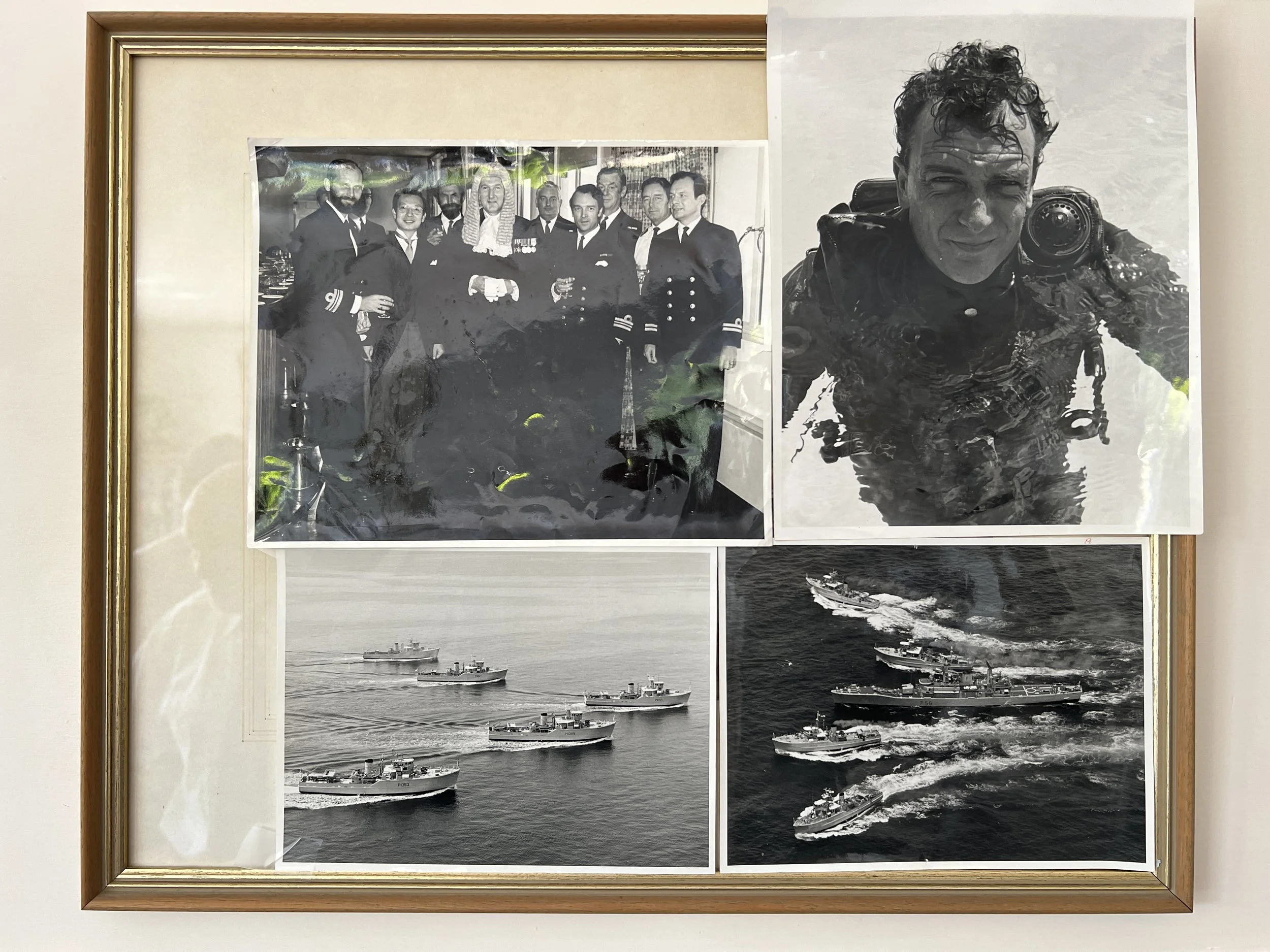
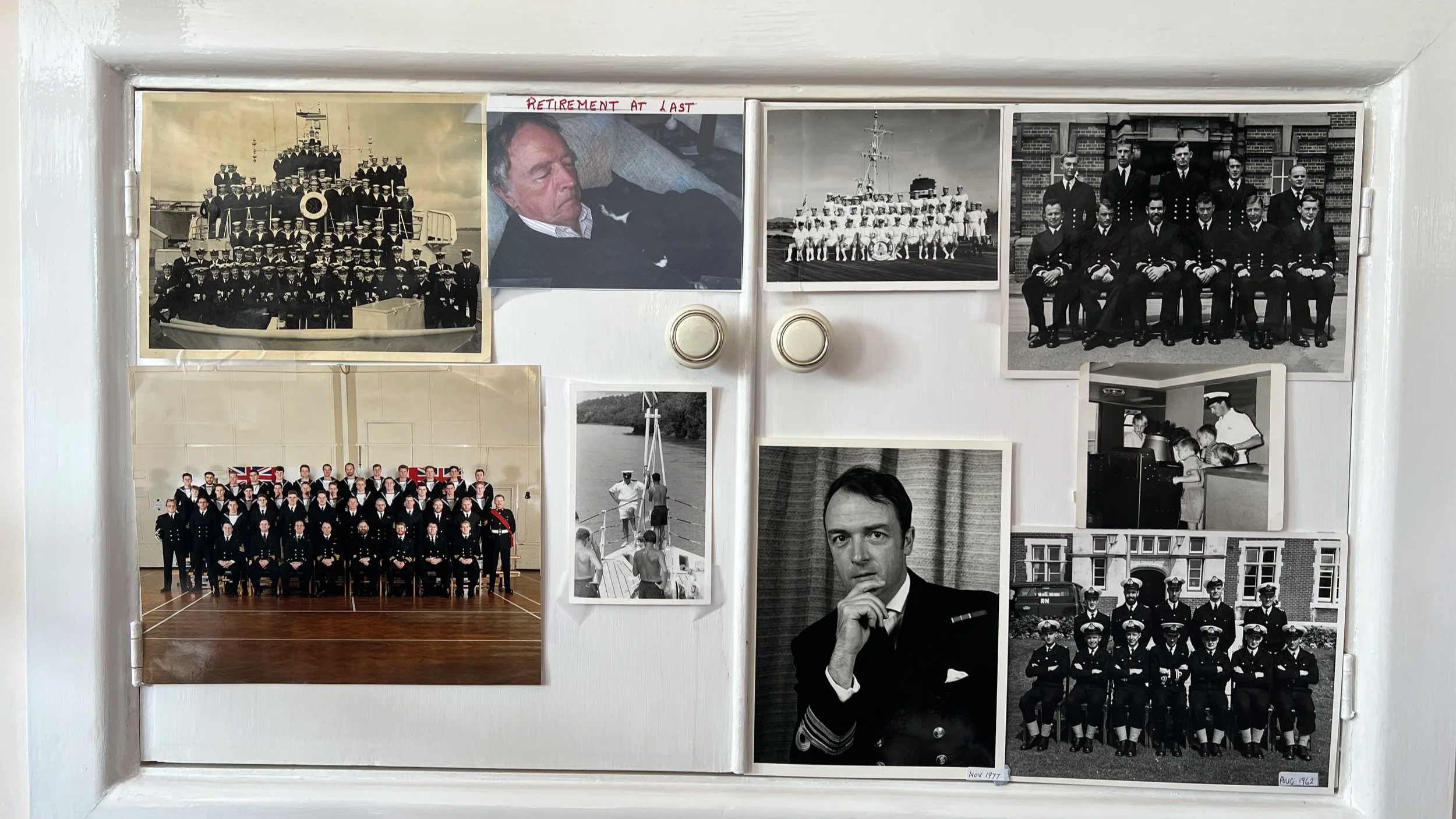
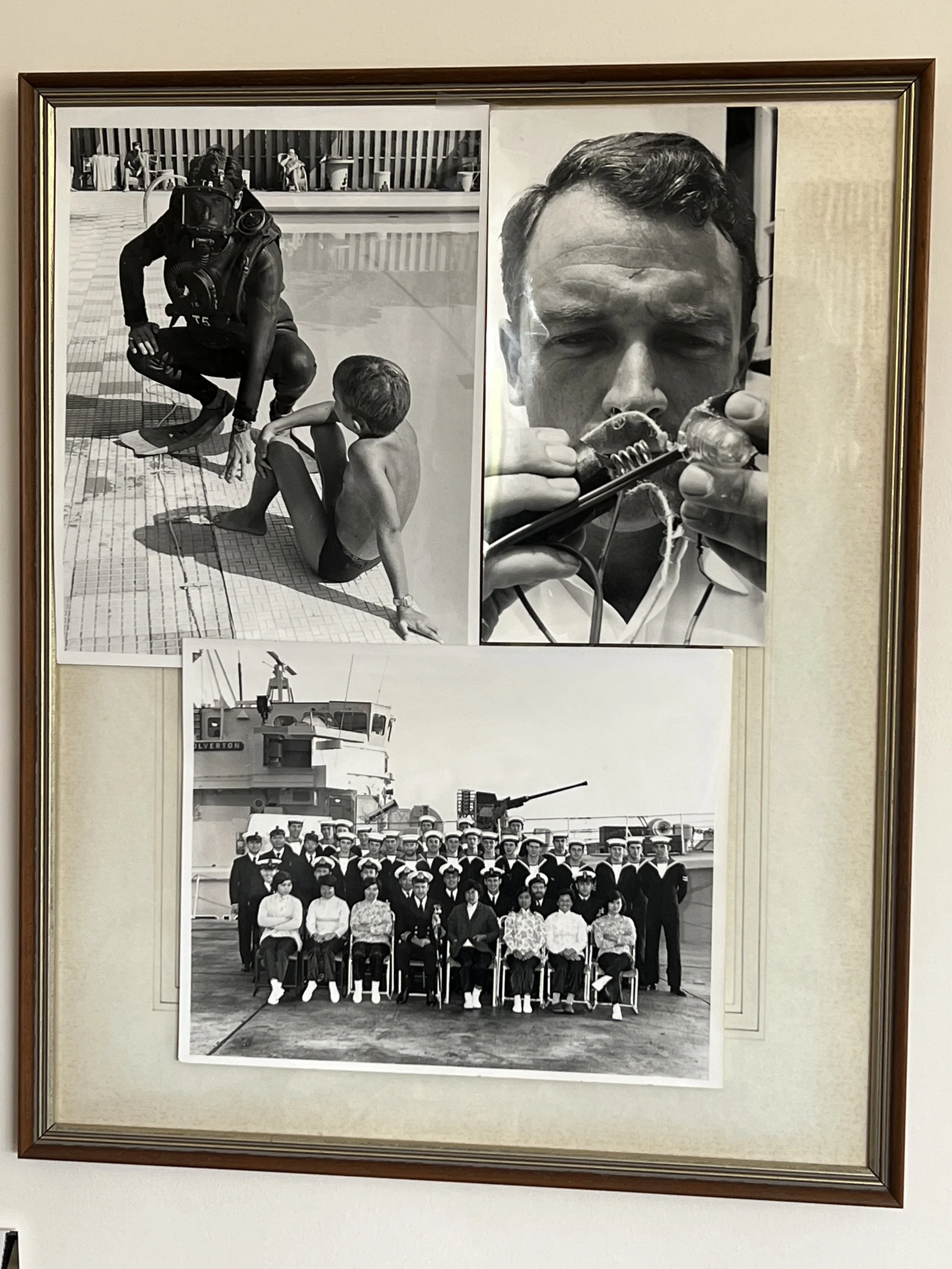
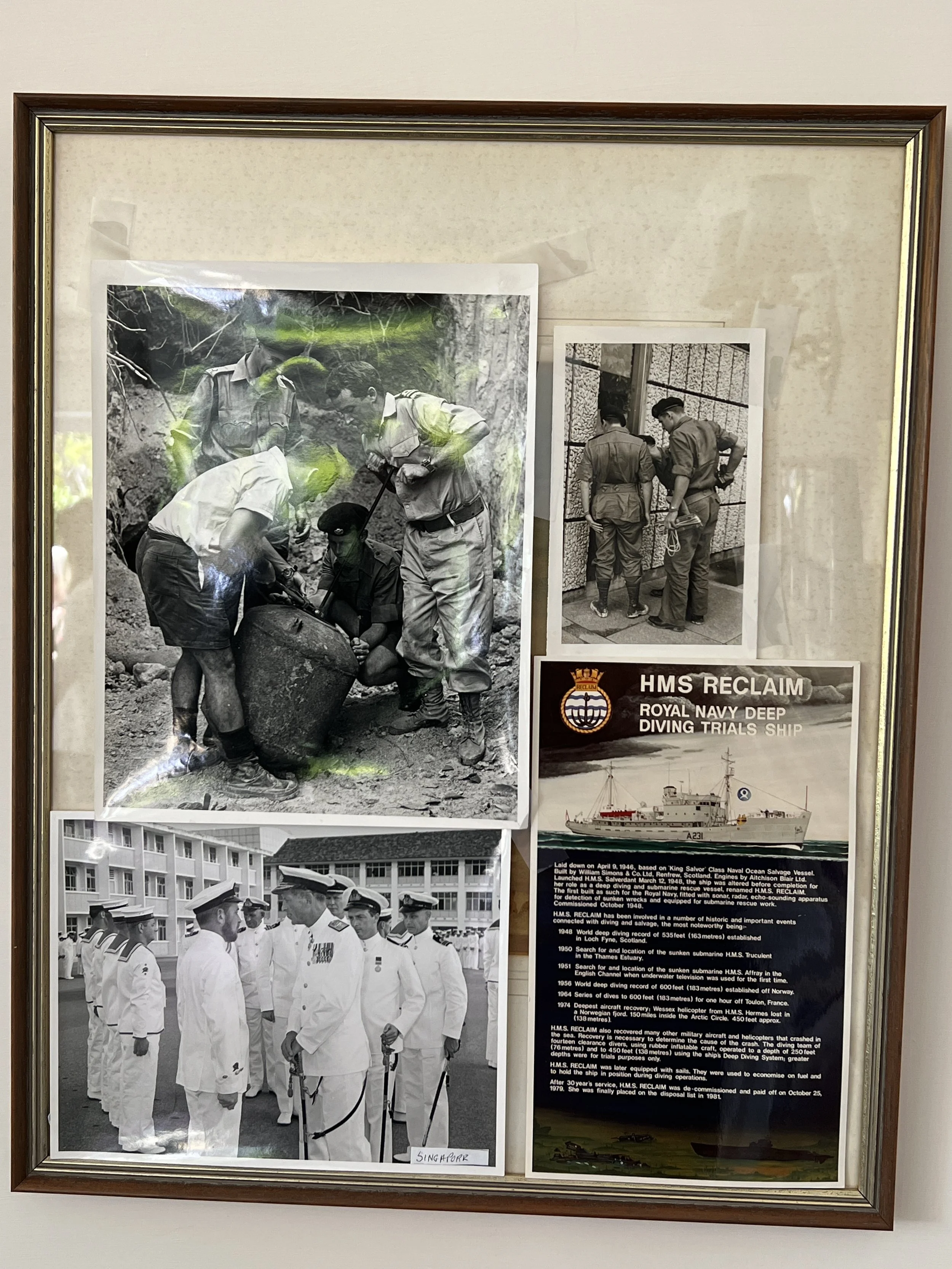
I am sure all members of our community will join me in extending our sincere condolences to John’s wife Rae and the other members of their family.
By Martin Woodward:
“Hi Rob.
Hope all well.
Sad to see John Coggins had died. I did a fair amount of munitions clearance work with Graham Shaw and John Coggins was with us on a clearance job in Vietnam (Mekong Delta) and Thailand in 1995. Another old character gone.”