
22 Aug 2026 - Until recently, little had been written about aerial minelaying operations by the RAF during the Second World War and the subject has been largely ignored. For security reasons, the RAF practice of aerial minelaying was called “gardening” and maps and charts were divided into target areas code-named different varieties of vegetables, flowers and trees.
RAF aircraft of Bomber and Coastal Commands, supported in some small part by the Royal Navy’s Fleet Air Arm, laid a total of 48,149 mines between 1939 and 1945, This resulted in the sinking of 864 enemy vessels and damage to 483 others for the loss of 527 RAF aircraft, a much greater return than aircraft attack by other means. Of equal or greater significance was the effort the Germans had to make to defend their ships and submarines against the threat of mines and the resources they needed to invest in and maintain for clearing re-seeded (or even suspected re-seeded) minefields on an almost daily basis.
Back in May, Danish author Frank Weber, a historian from Aarhus University and an art historian from the University of Copenhagen, contacted me to request I review his newly published book titled Operation Gardening: Bomber Command Minelaying in Danish Waters 1940-1945. I wholeheartedly agreed and he subsequently sent me two copies.
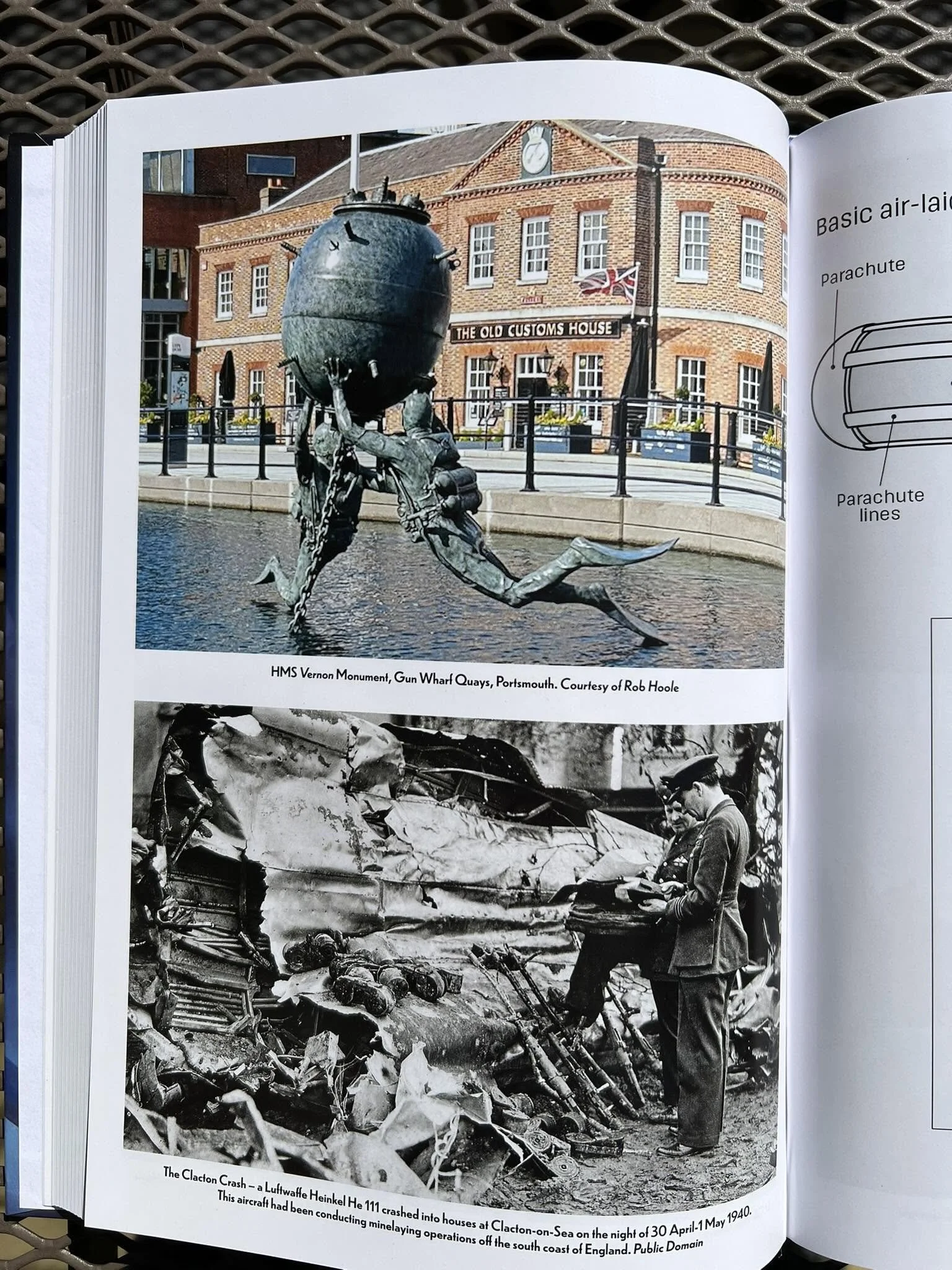
Coincidentally, I was already reading The Invisible Campaign: Bomber Command Gardening Operations 1940-1945 by Jane Gulliford Lowes, a military & aviation historian, author of narrative non-fiction, broadcaster and occasional lawyer. I had previously provided her with some information and she kindly included one of my photos of the Vernon Mine Warfare & Diving Monument in the book’s pages.
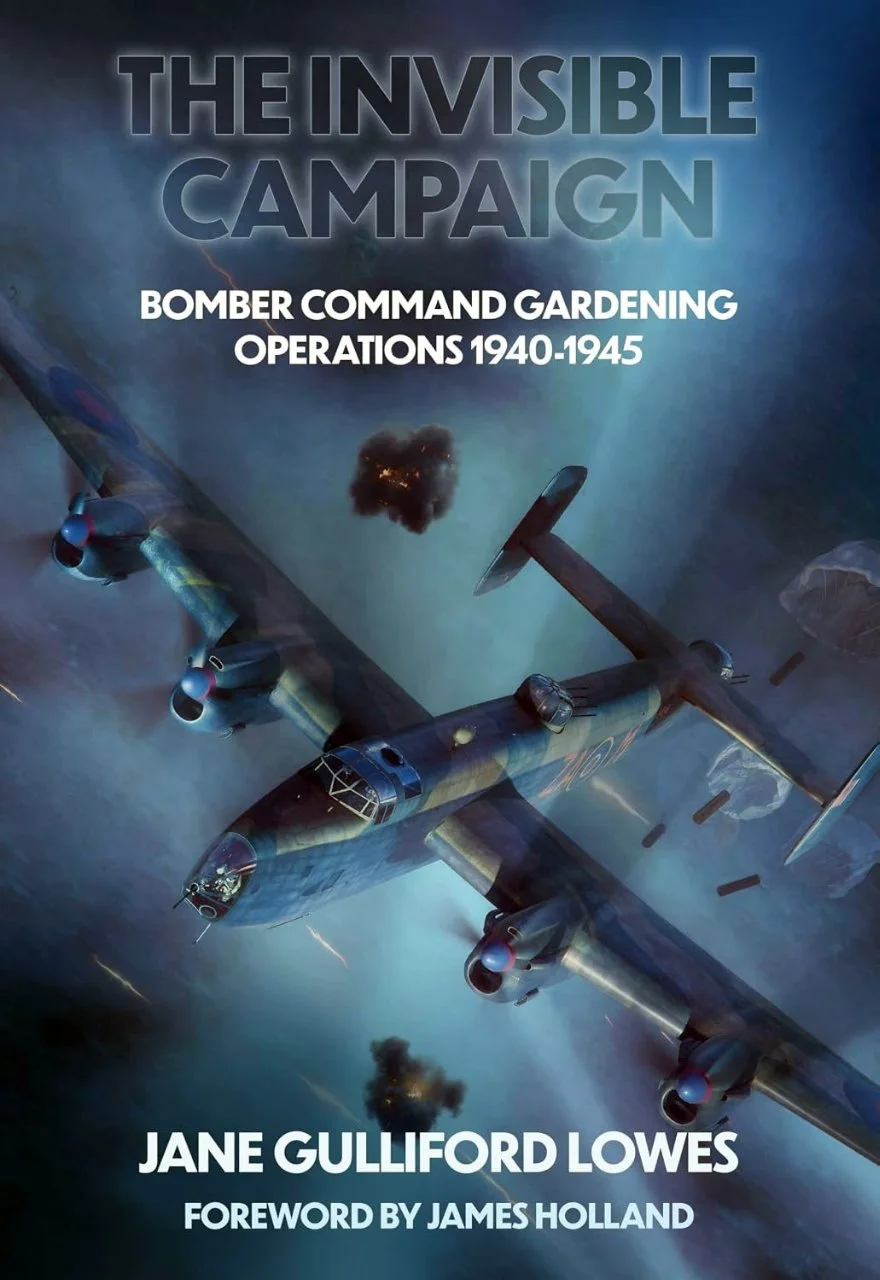
Both these hardbacks are extremely well-written, detailed, meticulously researched using primary sources and richly illustrated with photos, maps, diagrams and tables. While Frank Weber’s book concentrates on Bomber Command’s intensive mining of Danish waters, Jane Gulliford Lowe’s tome, which incorporates elements of Frank’s 2015 PhD thesis, covers ‘gardening’ operations in both Danish waters and the Northern European theatre beyond.
Frank Weber’s 2015 PhD thesis published in 2018
‘Operation Gardening: Bomber Command Minelaying in Danish Waters 1940-1945’ by Frank Weber
In the introduction to his 284 page book, Weber explains how the susceptibility of Danish waters to mining was exploited during the Second World War by both the Allies and Germany. Indeed, by the end of the war, the Germans had laid 8,810 mines and 4,298 “explosive bouys” [sweep obstructors?] in the Skageerrak alone. In the meantime, the RAF had laid 7,819 in Danish waters. The evidence of such intense activity survives to this day with unexploded mines still being found in the Baltic and its approaches on a regular basis.
Ouvry’s rendering safe of a German magnetic ground mine on the mudflats at Shoeburyness in November 1939 so the boffins at HMS VERNON could examine its secrets and develop effective minesweeping systems and ship self-protective measures is given suitable prominence.
Weber goes on to explain the legal framework governing mining and the intracacies of the geo-political and military situation among Scandinavian countries leading up to and during the Second World War. Shared and national responsiblities for various sea areas and routes were complex and ever-changing, particularly when taking into account the traditional neutrality of Sweden despite it being the source of raw materials and armaments for both sides of the conflict. The Baltic as a sea route beteen Germany and its invading forces in the Soviet Union was also highly relevant. Something new I learned was that Danish naval vessels were kept busy mineseeping even after the country’s occupation by Germany.
Subsequent chapters cover the development of mines and mine countermeasures during the First World War and the lead-up to the Second World War culminating in the German use of magnetic mines and their recovery and examination by the British. The rest of the book is largely a chronological account of RAF aerial minelaying operations in Scandinavian waters and, contrary to widely held opinion, with the firm backing of Air Marshal Sir Arthur ‘Bomber’ Harris, the head of Bomber Command. If this sounds like a dry read, it isn’t because Weber includes the rationale behind many of the decisions made by both sides in a constant ‘cat & mouse’ game between those performing the mining and those having to develop appropriate countermeasures.
Weber does well in explaining the overall strategy and individual tactics of the mining campaign, and how it was constantly adapted to deal with changing circumstances, priorities and the availability of resources. I found his discussion of laying altitude and associated accuracy particularly interesting. He identifies and explains the technological advances and operational conduct of missions in a clear manner. Despite being largely academic and containing a comprehensive bibliography, the book is easily readable. To emphasise the significance of the subject, he points out that by the end of the Second World War, approximately 40% of the German Navy was involved in minesweeping with 57,000 men and 1,500 minesweepers on standby.
If I have one criticism of Weber’s book, it is the absence of an index. Despite this, I thoroughly enjoyed reading his flowing narrative and learned much.about the eventful history of mine warfare in Danish waters and the different people, decision-making, key events, technologies and platforms engaged in its conduct plus, of course, its longstanding aftermath. I thoroughly recommend it to students of Second World War joint air & sea operations in general and mine warfare in particular.
‘The Invisible Campaign: Bomber Command Gardening Operations 1940-1945’ by Jane Gulliford Lowes
Gulliford Lowes’ 301 page book is looser typed but more ambitious than Weber’s in covering the whole gamut of RAF aerial mining in the Second World War although much of it encompasses Weber’s focus of attention. I particularly liked her detailed accounts of a selection of minelaying missions from the perspective of aircrew members. She draws heavily on published works like Cowie’s but includes an impressive list of primary sources as end notes.
Ouvry’s rendering safe of a German magnetic ground mine on the mudflats at Shoeburyness in November 1939 so the boffins at HMS VERNON could examine its secrets and develop effective minesweeping systems and ship self-protective measures is given suitable prominence.
Guliford Lowes does not concentrate as much on higher level strategy and intricate geo-political concerns as Weber but she delves much further into the weeds of individual missions and brings them alive. Like Weber, she puts to bed the notion that ‘Bomber’ Harris was opposed to aerial minelaying as diverting resources away from conventional bombing of the German heartland. She also makes much more of the increasing availability of bigger and longer range bombers making it possible to intensify minelaying operations in critical areas.
Like Weber, Gulliford Lowes emphasises that the Admiralty remained responsible for the choice of targets and the production, distribution and maintenance of specific mine types plus supporting personnel at nominated airfields. Although Coastal Command aircraft such as Beauforts and even Swordfish ‘string bags’ were involved in the early stages of the campaign, they became less relevant as Bomber Command acquired heavier, longer range bombers such as the Lancaster, Halifax and Stirling. She points out that a major failing of aerial minelaying operations was down to bad weather and poor visibility preventing accurate location of target areas; in many cases this caused the cancellation of missions before they even took off. This was particularly the case until radio navigation aids became available but even then, winds could cause parachute mines dropped at higher altitudes to drift well clear of the intended target area.
As RAF minelaying operations intensified, so did the German defences with more enemy anti-aircraft ships, radar installations and night fighters being deployed to deter or defeat the bombers; this caused the dilemma of dropping at higher altitude to reduce the risk of being shot down, thus affecting the accuracy of the lay, or going in at low level to ensure greater accuracy while increasing the risk of destruction. In the end, higher level minelaying had to be deployed in most cases.
Gulliford Lowes provides useful appendices and a comprehensive bibliography as well as end notes. There are some marvellous photos of aircraft being loaded with mines and their aircrews but not as many tables, diagrams and explanatory maps as in Weber’s book. However, she does provided a useful index.
Conclusion
Despite each book containing similar material and basic facts for understandable reasons, they are suficiently different as to be complementary. I would recommend obtaining both for their distinctly different perspectives on a fascinating and, until now, under publicised subject.